
Maritime Industry Trends & Challenges: Green Fuels, AI Autonomy, and Geopolitical Shocks (2026)
Critical analysis of maritime decarbonization, IMO 2030 mandates, autonomous navigation, Red Sea rerouting, and top verified maritime news authorities.
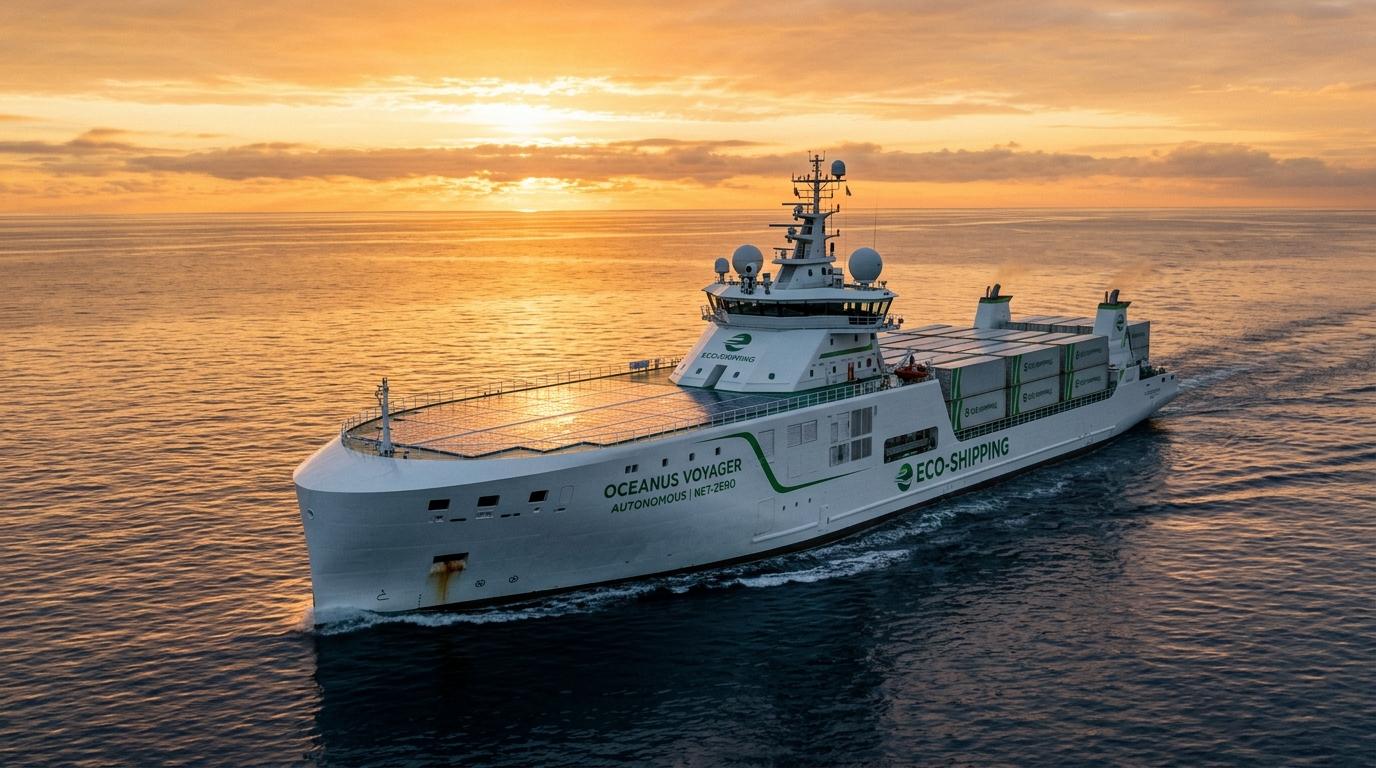
Maritime Industry Trends & Challenges
- Decarbonization Mandates: Global fleets are accelerating dual-fuel orders for green methanol, ammonia, and bio-LNG to satisfy IMO 2030 greenhouse gas reduction targets.
- AI Autonomy & MASS Systems: Maritime Autonomous Surface Ships (MASS Degrees 2 and 3) are entering active service across harbor tugs and feeder craft.
- Operational Technology Cybersecurity: Mandatory enforcement of IACS UR E26/E27 rules requires rigorous cyber-resilience hardening across onboard OT navigation and propulsion systems.
1. Clean Fuel Decarbonization & Alternative Propulsion Matrix
Tightening IMO GHG targets and the EU ETS emissions trading scheme are forcing accelerated fleet transition away from heavy fuel oil:
2. AI Autonomy, MASS & Smart Bridge Systems
The International Maritime Organization classifies autonomous commercial vessel operations into four distinct MASS degrees:
Degree 1: Automated Processes & Decision Support
Seafarers remain fully in command on board; automated algorithms execute operations and propose collision avoidance maneuvers.
Degree 2: Remotely Controlled Vessel with Crew on Board
The vessel is steered and operated from a Shore Control Center (SCC), while a reduced crew stands by on board for emergency takeover.
Degree 3: Remotely Controlled Vessel without Crew on Board
The vessel operates fully uncrewed, controlled and monitored exclusively by licensed shore-side master mariners via broadband SATCOM.
Degree 4: Fully Autonomous AI Decision-Making
The onboard AI operating system makes real-time nautical and machinery decisions autonomously in accordance with international COLREGs.
3. Macro Challenges: Geopolitics & Red Sea Routing
Commercial fleet operators are navigating intense geopolitical disruptions, structural shipping detours, and emissions taxation:
Cape of Good Hope Rerouting & Transit Strains
Diverting around southern Africa adds 10 to 14 sailing days per voyage, absorbing ~10% of global boxship capacity and surging bunker outlays.
EU ETS Maritime Carbon Allowances & Carbon Taxes
From 2024, commercial vessels over 5,000 GT calling at European ports must surrender EU Allowances for carbon emissions, adding millions in voyage fees.
Bunker Availability & Hub Port Congestion
Sudden route shifts overwhelmed regional bunkering ports in Africa and western Mediterranean transshipment hubs, creating quayside congestion.
4. Operational Technology (OT) & Marine Cybersecurity Architecture
As commercial vessels become interconnected industrial IoT nodes via high-bandwidth SATCOM, class rules mandate strict OT segregation:
Air-Gapping Bridge Navigation (ECDIS/RADAR)
Physical and logical segregation (VLAN isolation) separating crew internet from mission-critical navigation sensors and DP systems.
Mandatory IACS UR E26 & UR E27 Compliance
Mandatory shipyard requirements for all vessels contracted after Jan 2024, ensuring cyber resilience across shipboard power management and propulsion.
Hardened SATCOM & Secure Shore Gateways
End-to-end encryption and zero-trust authentication on all VSAT and LEO satellite links connecting vessel SCADA to shore superintendents.
5. Top Authoritative Marine Industry News Sources & Intelligence Platforms
Curated directory of authoritative maritime journalism and market intelligence services tracking global shipping developments:
6. Frequently Asked Questions: Marine Industry Trends & Challenges
Prepare Your Marine Fleet for 2026 & Beyond
BAHAR World advises fleet superintendents on alternative propulsion feasibility, hybrid engine retrofits, and hydrodynamic hull optimizations engineered to German standards.
BAHAR World Naval Engineering & Green Propulsion Lab
Directorate of Maritime Research & Clean Propulsion
Marine propulsion researchers and naval architects specializing in alternative dual-fuel engineering, MASS autonomous systems, and IACS cyber compliance.
BAHAR World Marine Engineering Divisions
Shipbuilding in Saudi Arabia
Complete industry guide to shipyards, patrol craft, and modern vessel building.
Ship Maintenance & Drydocking
Planning drydock periods, classification surveys, and coating maintenance.
Shipping Companies in Saudi Arabia
How commercial vessels call at Saudi ports and live AIS tracking.
Contact BAHAR World
Schedule a technical consultation on clean fuels and vessel efficiency.