
Ship Maintenance & Drydock Repair in Saudi Arabia | Bahar World
How to plan a repair period for Red Sea and Gulf fleets: drydock scope, environmental fouling, planning milestones, and partner selection.
Key Takeaways & Executive Summary
- Statutory Drydock Frequency: International classification societies mandate bottom inspections in drydock twice within every 5-year cycle for commercial merchant vessels.
- Middle Eastern Environmental Factors: Elevated water temperatures and extreme salinity in the Red Sea and Arabian Gulf accelerate biofouling and galvanic corrosion, requiring high-spec marine coatings.
- Advance Engineering Planning: Securing shipyard drydock slots and sourcing long-lead spares 6 to 12 months ahead limits unplanned off-hire time and ensures budget control.
- Shipyard Partner Criteria: Selecting shipyard partners with proven IACS class survey experience, transparent project management, and complete hull-to-propulsion engineering capabilities.
What Drydocking Covers
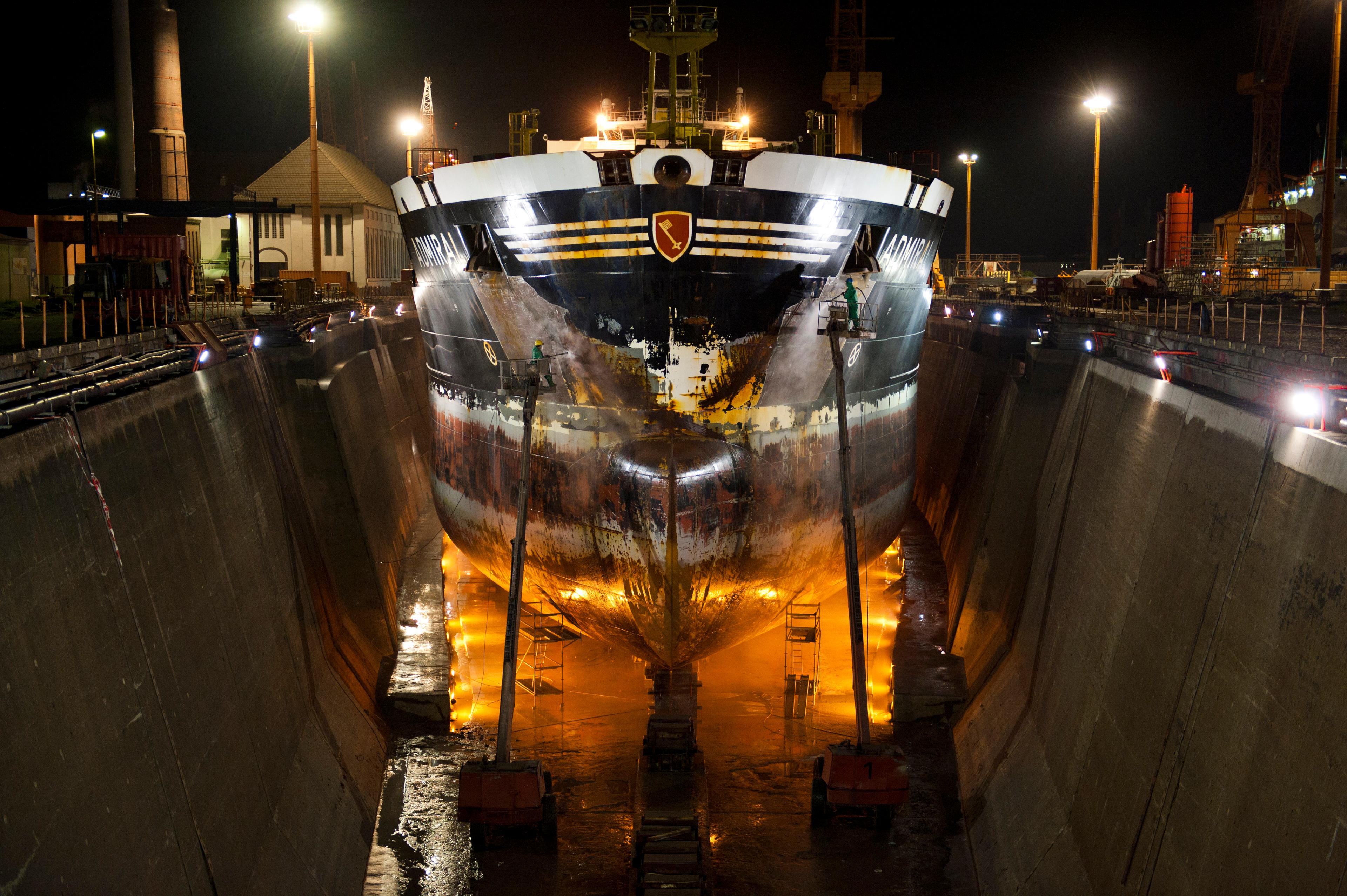
A vessel in the water cannot be fully inspected below the waterline. In a drydock or slipway, the shipyard gains direct, safe access to the most critical hull areas.
Hull Cleaning, Blasting & Coating
High-pressure washing, abrasive grit blasting, and application of specialized marine coating systems—including antifouling paints that limit marine fouling and optimize fuel economy.
Steel Inspection & Plating Renewal
Ultrasonic thickness measurement (UTM) under class surveyor oversight, and renewing steel plates where corrosion or structural impact has reduced plate scantlings.
Propeller, Shaft & Rudder Servicing
Comprehensive propeller inspection, shaft pulling, rudder pintle clearance measurements, bearing alignment, and stern tube seal renewal.
Sea Chests, Valves & Overboard Fittings
Overhauling sea chests, sea suction strainers, overboard discharge valves, and hull penetration fittings that cannot be serviced safely afloat.
Sacrificial Anode Replacement
Renewing zinc or aluminium sacrificial anodes installed for sacrificial cathodic protection, safeguarding underwater metal surfaces against electrochemical corrosion.
Machinery & Auxiliary Overhauls
Taking advantage of a stationary dry vessel to overhaul main propulsion engines, auxiliary diesel generators, cooling pumps, and central plant systems.
Classification Society Mandates (DNV, Lloyd’s Register, ABS):
Major classification societies such as DNV and Lloyd’s Register standardly require bottom inspections in drydock twice within every five-year classification cycle (with no more than 36 months between dockings), one of which aligns with the five-year Special Survey.
Drydocking vs. In-Water Survey (UWILD) Matrix
Direct comparison of capabilities, classification surveyor acceptance, and achievable maintenance scope.
| Inspection Parameter | Drydock Period (Lifting) | In-Water Survey (Afloat) |
|---|---|---|
| Operational Method | Complete dewatering in graving dock, floating dock, or slipway | Vessel remains afloat; executed by certified divers or ROVs |
| Class Society Acceptance | Full acceptance for all 5-year Special Renewal Surveys | Accepted for intermediate surveys on qualified vessels with UWILD notation |
| Shaft & Propeller Servicing | Full capability: shaft pulling, bearing clearance, seal renewal | Not possible (limited to external visual & blade polishing) |
| Steel Plating Renewals | Comprehensive hot work, plate cropping, class-certified welding | Not permissible below waterline without specialized habitat |
| Grit Blasting & Antifouling | Full abrasive blasting to Sa 2.5 and multi-coat antifouling application | Not possible (restricted to mechanical diver brush cleaning) |
| Typical Timeline & Costs | 10–25 operational days; higher investment, complete overhaul | 1–3 days; minimal disruption to commercial charter operations |
Why the Red Sea and the Gulf Need Special Attention
Warm, high-salinity water across the Red Sea and Arabian Gulf significantly accelerates marine growth (biofouling) and hull corrosion rates.
Salinity & Corrosion Protection
Red Sea salinity exceeding 40 PSU accelerates electrochemical pitting on hull plates and running gear, demanding robust sacrificial anodes.
Cooling Plant & Sea Temperature
Summer sea surface temperatures reaching 33–35°C reduce heat exchanger thermal margins, requiring frequent descaling and marine growth cleaning.
Accelerated Biofouling & Coral Growth
Tropical marine life promotes aggressive barnacle and tube worm colonization, increasing hull skin friction and escalating fuel consumption by up to 20%.
Airborne Dust & Coastal Sandstorms
Fine desert sands from coastal dust storms clog engine room intake louvers, turbocharger filters, and deck machinery linkages.
A Practical Planning Timeline
A successful drydock period requires structured advance planning months before the vessel enters the dock gate:
Define the Scope Early
Combine mandatory classification survey requirements, crew-reported defects, and scheduled vessel upgrades into a unified, consolidated work specification.
Order Long-Lead Parts in Advance
Propulsion components, deck machinery, seals, and marine electronics often require long manufacturing lead times; verify availability before drydock entry.
Reserve the Yard Slot and Surveyor
Drydock berths and accredited classification society surveyors are constrained resources; secure reservations early to avoid schedule slippage.
Agree Reporting and Variation Rules
Establish transparent procedures with the shipyard for documenting opening-up inspections, variation orders, and rapid client sign-off.
Plan the Vessel’s Return to Service
Incorporate dedicated undocking procedures, full-power sea trials, class certificate endorsements, and formal handover documentation.
How to Choose a Marine Service Partner
Practical questions to guide fleet superintendents when evaluating shipyards and marine repair contractors:
The facility must hold formal approval from recognized IACS classification societies, with qualified marine superintendents attending and presenting work to class surveyors.
Counterfeit or non-approved marine spares compromise vessel safety and class validity. Ensure all parts are sourced from certified OEM supply lines.
Professional yards utilize structured daily photographic reporting and formal variation requests before executing unbudgeted repairs.
Trading routes across the Red Sea and Gulf require agile rapid-response teams capable of tackling collisions, groundings, or sudden propulsion outages.
Real value stems from qualified naval architects and marine engineers who diagnose root causes and optimize efficiency, rather than merely replacing failed parts.
Frequently Asked Questions: Ship Maintenance & Drydocking
Share Your Vessel Details for a Tailored Drydock Plan
BAHAR World’s marine engineering desk prepares a comprehensive technical assessment for your scheduled drydock scope, aligned with classification surveys and Red Sea fouling protection.
BAHAR World Ship Maintenance & Drydock Engineering Desk
German-Saudi Shipyard Engineering Group
Senior shipyard superintendents and marine coating inspectors delivering scheduled drydock overhauls, IACS class survey compliance, and corrosion protection for Middle Eastern fleets.
BAHAR World Marine Engineering Divisions
Shipyard Maintenance & Drydocking
Comprehensive hull grit blasting, steel plating renewal, and survey support.
Shipbuilding in Saudi Arabia
Complete industry guide to shipyards, patrol craft, and modern vessel building.
Commercial Boats & Patrol Craft
Commercial workboats, pilot launches, and high-speed interceptors.
Contact Marine Engineering Team
Schedule your vessel refit or consult with our drydock superintendents.